

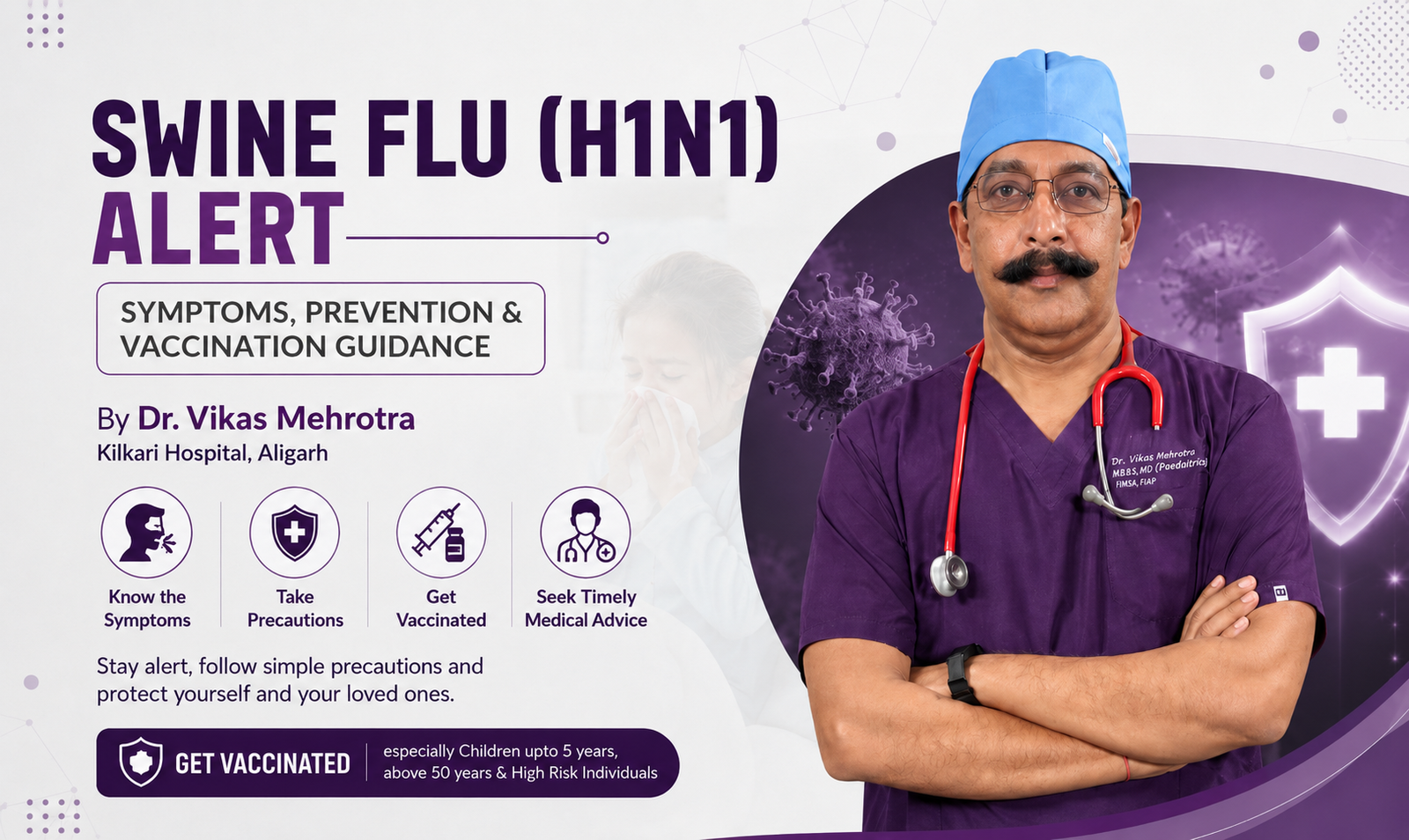
By Dr. Vikas Mehrotra
Kilkari Hospital, Aligarh
Seasonal influenza, including Influenza A (H1N1), commonly known as Swine Flu, is a contagious respiratory infection that should not be ignored—especially in young children, elderly people and individuals with underlying health conditions.
The Ministry of Health & Family Welfare (MoHFW) and National Centre for Disease Control (NCDC) continue to provide guidance for the prevention and management of seasonal influenza. Current influenza surveillance and vaccine recommendations in India also include protection against the circulating A(H1N1)pdm09 strain.
As a doctor, my advice to parents and families is simple: do not panic, but do not ignore flu-like symptoms either. Early recognition, proper hygiene, medical consultation and appropriate vaccination can significantly reduce the risk of complications.
What Is Swine Flu (H1N1)?
Swine Flu is caused by the Influenza A (H1N1) virus. It spreads mainly from one person to another through respiratory droplets released when an infected person coughs, sneezes or talks.
The virus may also spread when a person touches a contaminated surface and then touches their eyes, nose or mouth.
Because symptoms can initially resemble a common seasonal flu, timely medical evaluation becomes important, particularly for people who are at higher risk.
Common Symptoms of H1N1 Swine Flu
According to official seasonal influenza guidance, symptoms may include:
- Fever
- Cough
- Sore throat
- Running or blocked nose
- Headache
- Muscle or body aches
- Weakness or unusual tiredness
- Chills
- Vomiting or diarrhoea, particularly in some children
- Difficulty in breathing or breathlessness in more serious cases
MoHFW guidance describes influenza-like illness as an acute respiratory infection involving sudden cough or sore throat along with fever, while body ache, headache, fatigue, vomiting and diarrhoea may also occur.
Why Parents Should Be Extra Careful With Young Children
Children, particularly children below 5 years of age, can be more vulnerable to complications from influenza. MoHFW’s clinical categorisation guidance includes children under five among groups requiring greater clinical attention when they develop influenza-like symptoms.
Parents should closely monitor a child who develops fever, cough or unusual weakness.
Seek medical advice urgently if your child develops:
- Fast or difficult breathing
- Persistent high fever
- Extreme sleepiness or difficulty waking
- Poor feeding or refusal to drink fluids
- Signs of dehydration
- Bluish lips or face
- Severe weakness
- Repeated vomiting
- Symptoms that improve but suddenly become worse again
Early medical assessment is especially important in infants, young children and children who already have asthma, heart disease, neurological conditions, metabolic disorders or weakened immunity.
Who May Be at Higher Risk of Complications?
Certain individuals require extra caution during influenza season.
Higher-risk groups can include:
- Young children, particularly those below 5 years
- Pregnant women
- Older adults
- People with asthma or chronic lung disease
- People with heart, liver or kidney disease
- People with diabetes
- Individuals with neurological disorders
- Cancer patients
- People with weakened immune systems
- People receiving long-term treatment for certain medical conditions
Official NCDC public guidance similarly identifies infants, older people, pregnant women, immunodeficient individuals and people with medical or surgical illnesses among groups requiring greater caution.
H1N1 Vaccination: An Important Preventive Step
Influenza viruses change over time, which is why vaccine composition is periodically updated.
For the 2026 influenza season, official Indian guidance notes that circulating influenza strains in India broadly resemble the WHO-recommended vaccine composition, including an A(H1N1)pdm09-like virus component.
Vaccination can be particularly important for individuals who are at greater risk of influenza-related complications.
However, the appropriate vaccine, timing and vaccination schedule should always be discussed with your doctor, especially in:
- Young children
- Elderly individuals
- Pregnant women
- People with chronic medical conditions
- Patients with reduced immunity
Parents should avoid choosing or administering any vaccine solely on the basis of social-media messages. A paediatrician can guide you according to your child’s age, previous vaccination history and current health status.
Simple Precautions That Can Help Prevent Swine Flu
Prevention begins with everyday habits.
1. Wash Hands Frequently
Wash your hands regularly with soap and water, particularly after coughing, sneezing or returning from crowded places.
2. Cover Your Mouth and Nose
Cover the mouth and nose while coughing or sneezing. Dispose of used tissues safely and avoid reusing them.
3. Avoid Touching Your Face
Try not to touch your eyes, nose and mouth unnecessarily, particularly with unwashed hands.
4. Avoid Close Contact When Sick
If you have flu-like symptoms, avoid close contact with children, elderly people and other high-risk family members.
5. Avoid Unnecessary Crowded Places When Unwell
Rest at home if you are ill and avoid exposing others to infection.
6. Stay Hydrated
Drink adequate fluids and maintain proper nutrition during recovery.
7. Do Not Self-Medicate
Avoid taking antibiotics, antivirals or other prescription medicines without medical advice. Influenza is a viral illness, and treatment should be decided according to the patient’s symptoms, risk factors and clinical condition.
Official NCDC advice also recommends handwashing, covering the nose and mouth during coughing or sneezing, avoiding touching the face, drinking adequate fluids, avoiding crowded places when appropriate and avoiding self-medication.
When Should You Consult a Doctor?
Do not wait for symptoms to become severe if you or your child belongs to a high-risk group.
Medical consultation is especially important when there is:
- Difficulty breathing
- Persistent or worsening fever
- Chest discomfort
- Severe weakness
- Dehydration
- Altered behaviour or unusual drowsiness
- Worsening of an existing medical condition
- Rapid deterioration after initial improvement
Breathlessness or significant clinical deterioration requires prompt medical evaluation.
A Message From Dr. Vikas Mehrotra
Swine Flu is preventable and manageable when symptoms are recognised early and appropriate precautions are taken.
Parents should remain observant during influenza season, particularly when young children develop fever, cough, sore throat or breathing difficulty.
Do not depend on self-medication or delay treatment because you assume it is “just a normal flu.”
Timely medical guidance can help identify children who need closer observation, treatment or preventive vaccination.
At Kilkari Hospital, Aligarh, our focus is on providing timely and appropriate medical care for children and helping parents understand the right preventive steps for seasonal infections such as influenza.
Stay aware. Maintain good hygiene. Discuss vaccination with your doctor. Seek medical advice when symptoms require attention.
Consult Dr. Vikas Mehrotra at Kilkari Hospital, Aligarh
If your child is experiencing symptoms of influenza or you would like guidance regarding seasonal influenza/H1N1 vaccination, consult your paediatrician for an individual assessment.
Kilkari Hospital, Aligarh
Dr. Vikas Mehrotra
Paediatric Care | Child Health | Preventive Healthcare
Frequently Asked Questions
- Is H1N1 the same as Swine Flu?
- Yes. The term Swine Flu is commonly used for illness caused by the Influenza A(H1N1)pdm09 virus.
- Can children get H1N1?
- Yes. Children can become infected with seasonal influenza, and younger children may have a higher risk of developing complications.
- Is there a vaccine for H1N1?
- Current seasonal influenza vaccines contain components designed to protect against important circulating influenza strains, including an H1N1 component. The appropriate vaccine and schedule should be discussed with a doctor.
- Can I take antibiotics for Swine Flu?
- Do not start antibiotics or other prescription medicines on your own. Antibiotics treat bacterial infections and are not routinely used simply because someone has influenza. Treatment should be guided by a qualified doctor.
- When should parents take a child to the hospital?
- Seek prompt medical care if a child has difficulty breathing, persistent high fever, dehydration, severe weakness, unusual drowsiness, poor feeding or worsening symptoms.